
Is Finishing Your Basement Worth It? ROI Explained for Utah Homeowners
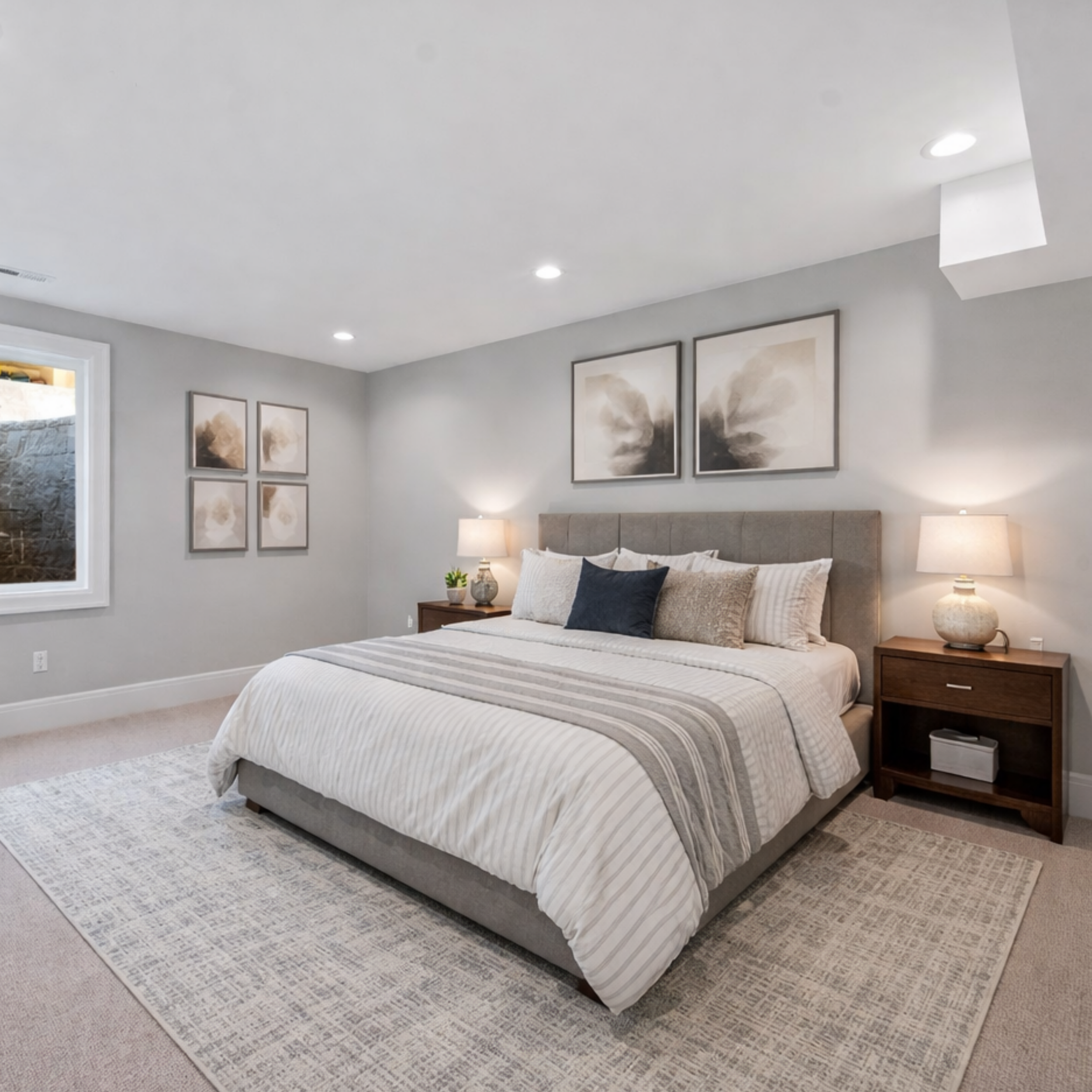
Finishing a basement is one of the most popular home improvement projects in Utah — and one of the most financially sound. It adds livable square footage, increases resale appeal, and in many cases generates monthly rental income. For homeowners weighing the decision, the question isn't really if it pays off. It's how much — and that depends on the quality of the work, how you use the space, and where you are in Utah.
Here's what you need to know.
What's the ROI on Basement Finishing in Utah?
Nationally, homeowners recoup roughly 70% to 75% of the cost of a basement finishing project in added home value. In Utah's competitive housing market — especially in family-oriented communities along the Wasatch Front — the return can push toward the higher end of that range.
To put that in concrete terms: if you invest $60,000 in a well-designed basement finish, you can realistically expect to add $42,000–$45,000 or more in appraised value to your home. And that doesn't account for the years of improved living you'll enjoy before you sell.
For context, finished basements in Utah typically cost $35 to $75+ per square foot, depending on layout complexity, finish level, and whether you're adding a bathroom or bedroom. A basic 1,000 sq. ft. finish might run $35,000–$50,000. A more complete buildout with a legal bedroom, full bath, and quality finishes could reach $75,000 or more.
Why Utah Is Different From the National Average
In some parts of the country, a finished basement is a nice-to-have. In Utah, it's often expected — especially in family-forward markets like South Jordan, Draper, Sandy, and Tooele County.
A few factors drive stronger ROI in Utah specifically:
Large homes with unfinished basements are common. Many Utah homes are built with full unfinished lower levels, making finishing an obvious upgrade buyers are already anticipating.
Family size tends to be larger. Utah consistently ranks among the states with the highest average household size, which means extra bedrooms and living space are in demand.
The rental market is strong. A properly designed basement with a separate entrance can generate meaningful rental income as an ADU (Accessory Dwelling Unit), which dramatically improves your total return.
Buyers treat it as a completed value-add. When a basement is already finished, buyers don't need to budget for it separately — which shortens your time on market and supports a higher offer price.
What Increases (or Decreases) Basement ROI
Not all basement finishes return the same percentage. Here's what moves the needle:
What increases ROI:
Adding a conforming bedroom (requires egress window and minimum ceiling height)
Including a full bathroom — one of the highest-value additions per dollar spent
Designing the space as a legal separate unit or ADU
Using quality materials and professional construction throughout
Pulling proper permits (more on this below)
What decreases ROI:
Over-customizing for your specific taste (a themed sports bar may not appeal to future buyers)
Skipping waterproofing or moisture mitigation
Poor layout that wastes square footage
Unpermitted work — this is a serious issue in Utah
A Note on Permits
Unpermitted basement work is one of the most common mistakes Utah homeowners make — and one of the most costly. In 2025, two homes in Herriman, Utah burned down. Neither had permits for their finished spaces, and both insurance claims were denied. Permits for electrical, plumbing, and structural work are not optional. They protect your investment, your insurance, and your family.
Key Benefits Beyond the Sale Price
Return on investment is about more than what you'll recoup when you sell. Finished basements improve daily life in ways that matter:
More usable living space — A finished basement effectively expands your home without adding to its footprint. That extra square footage can house a home office, a rec room, a guest suite, or a dedicated space for older kids.
Rental income potential — A basement designed with a separate entrance, kitchenette, bedroom, and bathroom can generate $800–$1,400/month in rental income in many Utah markets, depending on location and finish quality. Over several years, that income can fully offset your renovation cost.
Better functionality for growing families — Instead of moving to a larger home (with all the associated costs), many Utah families choose to finish their basement and stay put. It's almost always the more cost-effective option.
Faster sale when you're ready to move — Homes with professionally finished basements typically sell faster than comparable homes with unfinished lower levels. In a tighter market, that speed can be worth as much as the appraised value increase.
When Basement Finishing Makes the Most Sense
Basement finishing is a strong investment in most situations, but it's especially compelling in these cases:
You're planning to stay in the home 3+ years. You'll benefit from the space personally and give the real estate market time to reward your investment at resale. Short-term finishes can still pay off, but the longer your horizon, the better.
You have a completely unfinished basement. An untouched lower level is one of the highest-potential upgrade opportunities in your home. You're starting from scratch, which means you control the layout and design for maximum value.
You want to generate income. If your local zoning allows it, a well-designed basement apartment or ADU is one of the most powerful tools for improving your total return on the project.
You need more space for your family. If your household is growing and you're feeling the squeeze, a finished basement is almost always more cost-effective than a full addition or a move.
Final Thoughts
Finishing your basement is one of the strongest ROI investments available to Utah homeowners. It adds real, measurable value to your property, improves your day-to-day living, and often pays for itself — especially if you design the space with rental or resale in mind.
The key is doing it right: proper permits, quality construction, a functional layout, and waterproofing from the start.
